
HCF at PREMEDICARE: Federated Discovery for Genome-Centric OHCA Data
Stresa, Italy — 19–21 May 2026
The Human Colossus Foundation took part in the first Scientific Meeting of PREMEDICARE — Precision Medicine for Cardiac Arrest (COST Action CA24142), held from 19 to 21 May 2026 in Stresa, on the shores of Lake Maggiore. The three-day meeting gathered researchers, clinicians and technology partners from across Europe to advance the science and practice of Out-of-Hospital Cardiac Arrest (OHCA) care, with a focus on data, genetics, artificial intelligence and survivorship.
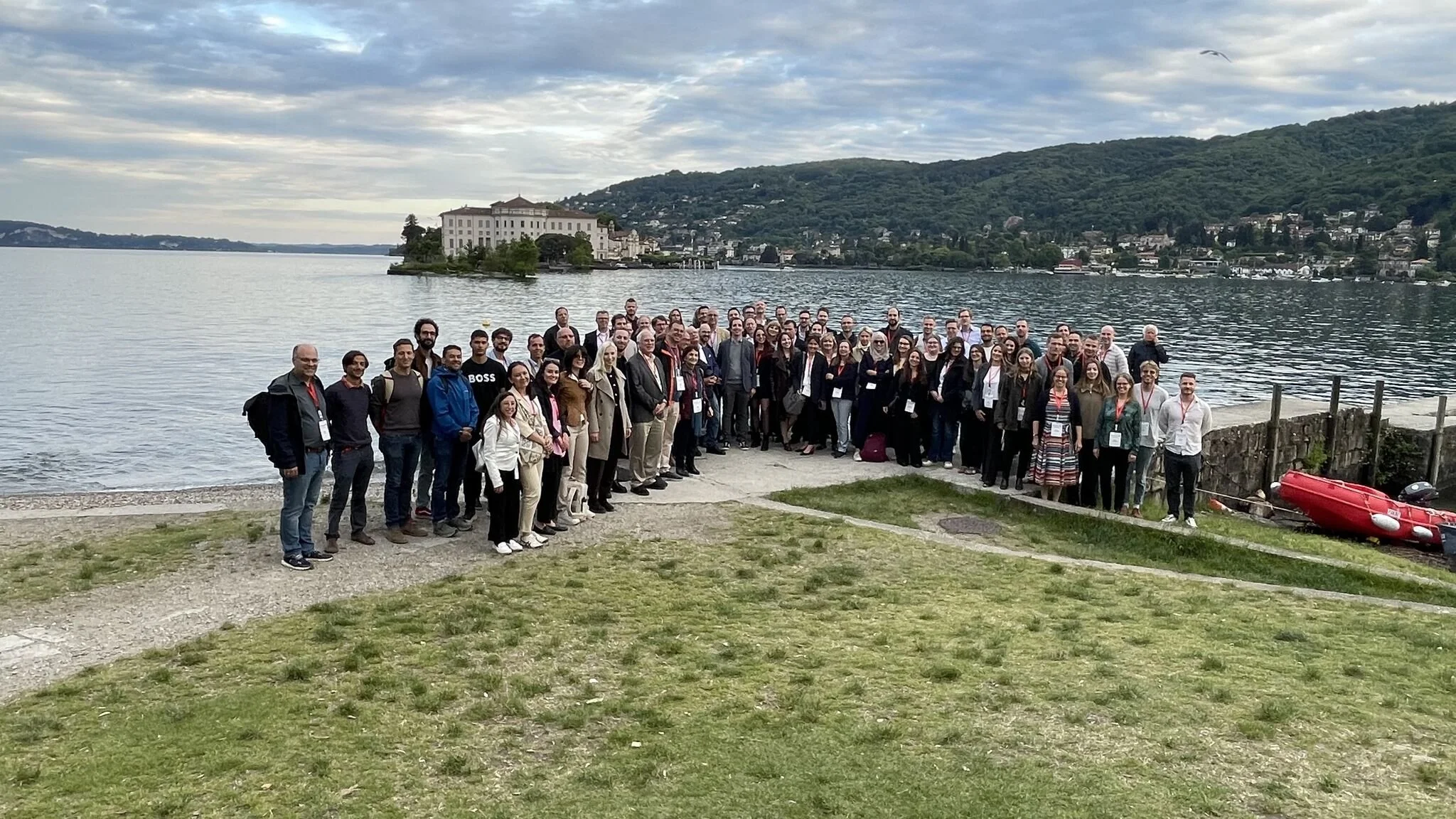
First PREMEDICARE Scientific Meeting, Stresa May 19 to 21 2026
Why PREMEDICARE matters
PREMEDICARE is a European COST Action coordinated by Dr.Enrico Baldi MD, PhD, FESC, FERC - Cardiologist, EP specialist at Fondazione I.R.C.C.S. Policlinico San Matteo and Dr.Hanno L. Tan MD, PhD Associate Professor of Cardiology and Principal Investigator of the Heart Center at the Amsterdam University Medical Center that brings together the OHCA research community around a shared ambition: moving from population-level resuscitation science toward precision medicine for cardiac arrest. Across the three days, the programme covered epidemiology and registries (EuReCa, ARREST, GOHCAR), community response and cardiac arrest centres, wearables and defibrillator data, AI for prediction and pathology, genetic architecture of sudden cardiac death, post-resuscitation care, neuroprognostication, and long-term outcomes for survivors and co-survivors.
HCF's wider interest in the OHCA community lies in strengthening its members' capacity to share data. The challenge is to integrate heterogeneous sources — including patient- and bystander-generated data — across multiple EU countries, while accommodating divergent purposes of use such as research, predictive modelling, and emergency response.
HCF's contribution: OCA for OHCA
On Wednesday 20 May, in the AI- and genetics-focused session moderated by Silke Kauferstein (Germany) and Charlotte Glinge (Denmark), Philippe Page presented on behalf of the Human Colossus Foundation:
> Federated Discovery Mechanisms for Genome-Centric Multimodal Data Integration in OHCA
The talk introduced the case for a minimum data standard for the OHCA community and a semantic data infrastructure that can accommodate the realities of the field: many national and regional registries, no central authority, and a pressing need to combine epidemiological, clinical, genomic and device-derived data lawfully and meaningfully.
The contribution framed three drivers shaping the agenda:
- managing data heterogeneity and hyper-connectivity across registries and modalities,
- realising the opportunities of precision medicine for cardiac arrest, and
- enabling lawful data discovery and exchange across jurisdictions.
The proposed direction — "OCA for OHCA" — applies the Overlays Capture Architecture to the OHCA domain, with one semantic architecture serving many registries, and a federated discovery mechanism enabling the coalescence of compatible epidemiological datasets without centralising sensitive data.
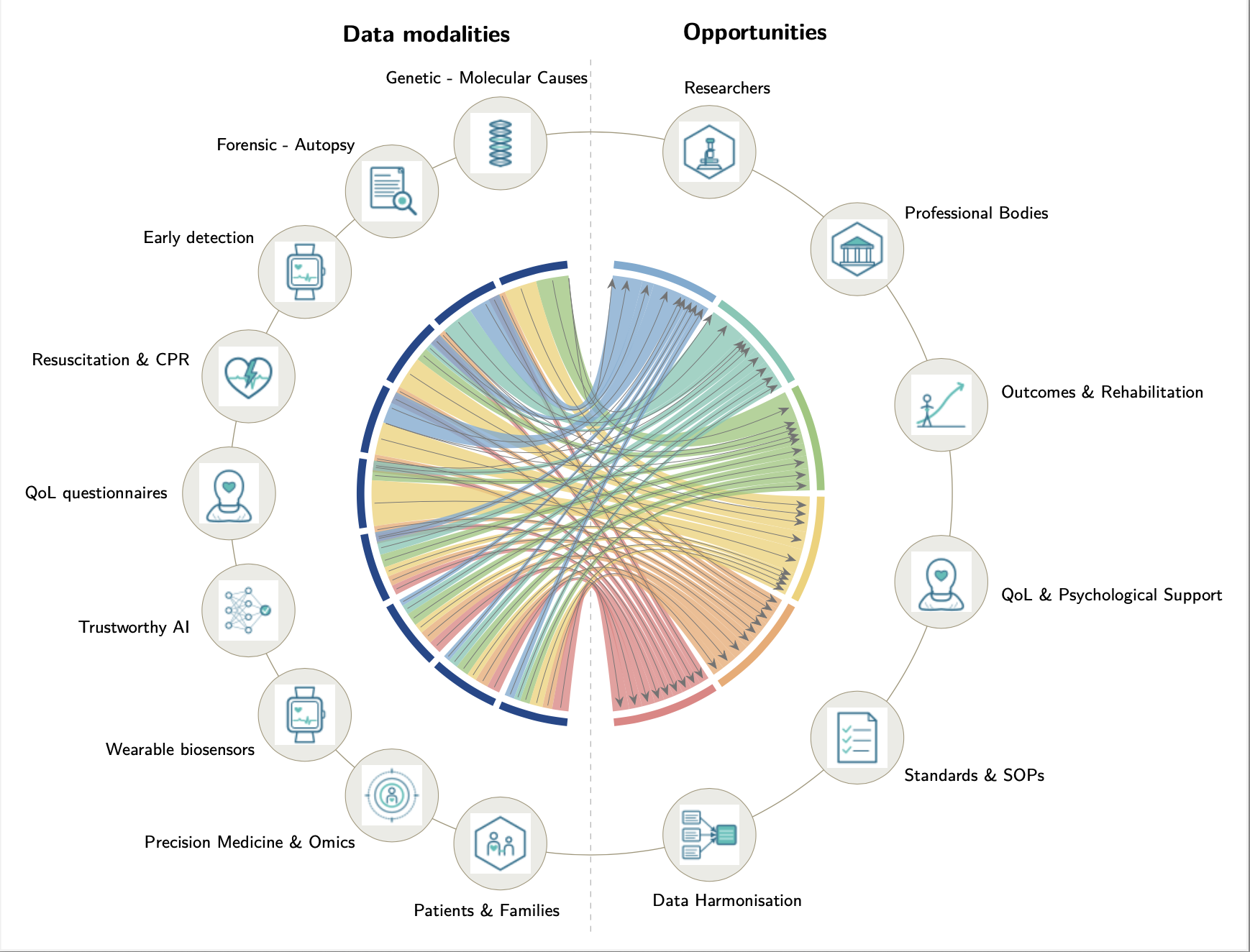
Source: Federated Discovery Mechanisms for Genome-Centric Multimodal Data Integration in OHCA - HCF presentation
Working Group 1: from proposal to project
Within PREMEDICARE, HCF contributeed to the Working Group 1 session on the afternoon of 20 May, where members reviewed the research proposals shaped during the online meetings of March and April and decided how to take them forward as joint projects.
Within PREMEDICARE, Working Group 1 is tasked with developing standard operating procedures (SOPs) for the collection of clinical, genetic, and forensic data from OHCA patients and their families, together with frameworks for integrating these data streams in OHCA research. WG1 will also define standards for the secure digitalisation and management of OHCA-related data, and establish a task force to develop collaborative research projects on the genetic causes of OHCA.
In the short term, WG1 will deliver a white paper on the Investigation of OHCA in the Young. To this end, the group is mapping current clinical, forensic, and genetic investigation practices across Europe, drawing on findings from the initial PREMEDICARE survey and on existing guidelines
A European, multi-stakeholder effort
The Stresa meeting reinforced something we have argued consistently at HCF: precision medicine at European scale must resolve a data governance and semantics problem at least as much as a clinical or algorithmic one. The strength of PREMEDICARE is that it puts those threads — registries, genomics, AI, wearables, post-arrest care and survivor experience — in the same room, and asks how their data can responsibly meet.
We are grateful to the organising team, the moderators, and the COST Association for the invitation and the warm hospitality on Lake Maggiore, and we look forward to the next steps with the PREMEDICARE community.
---
About PREMEDICARE — COST Action CA24142, Precision Medicine for Cardiac Arrest, funded by the European Union through the COST programme.
About the Human Colossus Foundation — Founded in 2020 and registered in Geneva under Swiss federal supervision (IDE: CHE-441.741.202), the Human Colossus Foundation is an independent non-profit working globally on the critical infrastructure for a data-agile economy — the Dynamic Data Economy (DDE). Its work spans decentralised semantics (Overlays Capture Architecture), decentralised authentication and key management, and a distributed governance model, released as open protocols and open-source implementations that are platform-independent by design. humancolossus.foundation